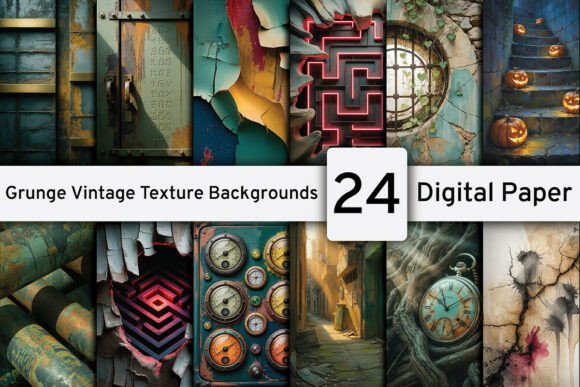
Grunge Vintage Texture Backgrounds: Your Digital Paper Bundle for Authentic Design
There's a particular challenge in modern digital design: creating work that feels authentic, textured, and full of character when you're starting with a flat, digital canvas. We spend hours trying to add subtle imperfections, layering effects, and searching for the right texture to make a project feel less sterile and more human. This is precisely where a well-curated collection like the Grunge Vintage Texture Backgrounds bundle becomes an essential part of a designer's toolkit. It's not just a set of images; it's a shortcut to adding depth, history, and a tangible sense of realism to your work.
Understanding the Visual Character
So, what exactly defines the style of these Grunge Vintage Texture Backgrounds? Think of the surface of an old leather-bound book, the faded, sun-bleached wallpaper in a historic home, or the subtly worn paper of a century-old map. The appeal lies in the controlled chaos—the soft, blurred edges of ink stains, the delicate web of fine cracks, the gentle gradients of aging, and the occasional speck of dust or fiber. This isn't about overwhelming dirtiness; it's about sophisticated, nuanced distressing that suggests a story and a past life.
The personality of this style is one of warmth, nostalgia, and authenticity. It evokes feelings of craftsmanship, history, and timelessness. In a world saturated with clean, flat design, these textures provide a powerful counterpoint, allowing your work to stand out by feeling more grounded and real. They bridge the gap between the digital and the physical, giving your designs a tactile quality that viewers can almost feel.
Practical Applications Across Creative Fields
The true value of a resource like this is its versatility. These aren't single-use assets; they are foundational elements that can elevate a wide array of projects. For designers working on brand identity, a subtle grunge texture can be the secret ingredient in a logo design or business card that needs to convey heritage, artisanal quality, or rugged individualism. It immediately sets a tone that a clean, modern typography alone cannot achieve.
Consider the world of editorial design and packaging design. A textured background can transform a book cover, a magazine spread, or a product label. It adds visual interest without competing with the primary content, helping to establish a mood—whether it's rustic, luxurious, or rebellious. For web design and social media graphics, these backgrounds serve as perfect layers. Use them as a full background for a hero image, as a textured overlay on a photo, or as a subtle fill for text boxes to add depth and break the monotony of solid colors.
For crafters and small business owners, the applications are equally broad. The bundle is ideal for creating scrapbooking pages with a vintage feel, designing unique planner inserts, or producing standout invitations and cards. Those in the print-on-demand (POD) space will find them invaluable for creating wall art, posters, and journals that have a professional, cohesive look. The seamless nature of the digital paper means patterns can be tiled or used as full backgrounds without worrying about awkward seams, ensuring a polished final product.
Making Informed Design Choices
Integrating any new design asset effectively requires a bit of strategy. When selecting a texture from the Grunge Vintage Texture Backgrounds collection, first consider the emotional tone of your project. A texture with heavy, dark stains might suit a gritty, industrial theme, while a lighter, more delicate paper grain could complement a romantic or nostalgic project. Always evaluate the contrast and color palette of the texture against your other elements—your chosen typeface, imagery, and color scheme—to ensure they harmonize rather than clash.
A key consideration is readability. A textured background is a supporting actor, not the lead. If you're placing body text over it, you may need to adjust the texture's opacity, apply a subtle color overlay, or use a semi-transparent shape behind your text to ensure it remains clear and legible. This is where testing is crucial. Experiment with layering. Try using the texture at 30% opacity for a subtle hint of age, or use it as a clipping mask for text or shapes to create intricate, textured typography.
Think about font pairing as well. The organic, irregular nature of grunge textures pairs beautifully with both strong, geometric sans serif fonts and elegant, traditional serif typefaces. The contrast between the structured letterforms and the chaotic texture creates dynamic visual tension. A script or handwritten font can also work well, reinforcing a personal, crafted aesthetic. The key is to let the texture enhance the overall visual hierarchy and brand perception, not detract from it.
Working with Your Bundle
This particular collection offers 24 distinct backgrounds, providing a solid range of options for experimentation. The specifications are tailored for high-quality output: the 12x16 inch / 3600x4800 pixel size at 300 DPI ensures they are print-ready for most standard projects, from posters to large-format prints. The RGB color mode is optimized for digital screens, making them perfect for web use, social media, and digital publishing, while still being convertible to CMYK for professional printing services.
As a premium font or asset bundle, the included files in JPG format are universally compatible with virtually all design software, from Adobe Photoshop and Illustrator to Canva and Procreate. This accessibility is a huge plus for both seasoned professionals and those just starting their creative journey. When evaluating any design assets, always check the licensing to ensure it covers your intended use, whether for personal projects or commercial applications like selling finished POD products.
Ultimately, resources like the Grunge Vintage Texture Backgrounds are about empowering your creativity. They provide a professional foundation that saves time and injects instant character into your work. By understanding their visual language and applying them thoughtfully, you can create designs that don't just look good, but feel meaningful and enduring.